Bloghow-to guides
YouTube Shorts monetization: what Shorts pay and when
Learn how YouTube Shorts monetization works: the YPP thresholds, the Creator Pool, the 45% share, YouTube's own payout math and the February 2027 changes.
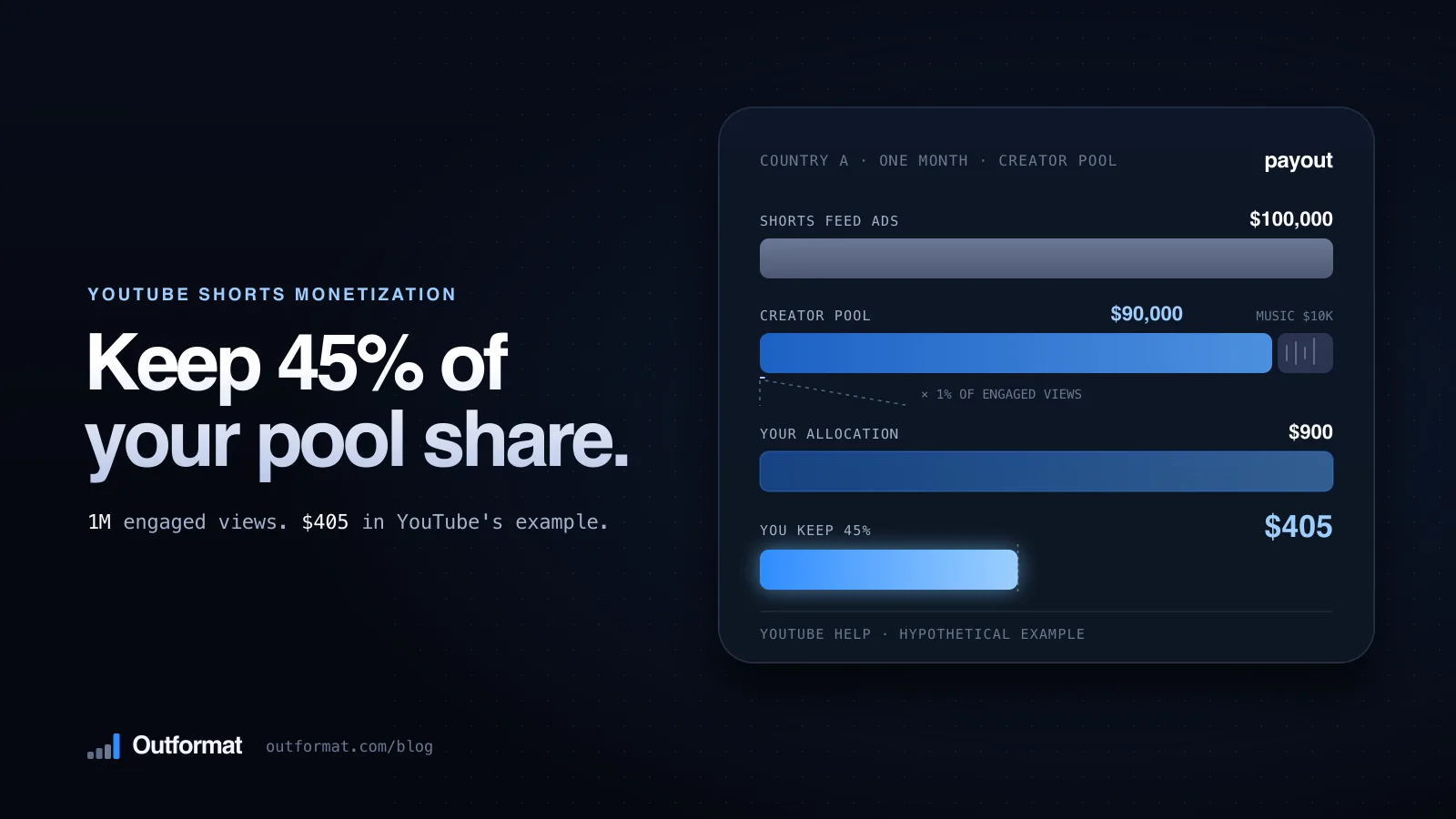
YouTube Shorts pay you a share of the ads that run between Shorts in the Shorts Feed: YouTube pools that revenue each month, splits it by engaged views, and you keep 45% of your allocation. To earn it, you join the YouTube Partner Program with 1,000 subscribers and 10 million qualified Shorts views in 90 days, and from February 1, 2027 you also need to hold 10 million qualified Shorts views over the last 90 days in every month you want paid.
This guide gives you the exact eligibility rules from YouTube Help, the four-step payout formula with YouTube's own example, the views that never earn, the February 2027 changes, and a plan to reach the threshold.
Check which YouTube Partner Program tier you can reach
YouTube runs two entry points into the YouTube Partner Program (YPP). Only the higher one pays you from Shorts ads.
| Tier | What you need | What you can earn |
|---|---|---|
| Fan funding and Shopping tier | 500 subscribers, 3 valid public uploads in the last 90 days, and either 3,000 qualified watch hours in 12 months or 3 million qualified Shorts views in 90 days | Channel memberships, Super Thanks and Shopping features, where each feature's own rules allow |
| Ads and Premium tier, until January 31, 2027 | 1,000 subscribers and either 4,000 qualified watch hours in 12 months or 10 million qualified Shorts views in 90 days | Shorts Feed ad revenue, YouTube Premium revenue, plus everything above |
| Ads and Premium tier, from February 1, 2027 | 1,000 subscribers and either 8,000 qualified watch hours in 365 days or 20 million qualified Shorts views in 90 days | Same as above |
Sources: YPP overview and eligibility, expanded YPP and YPP updates for February 2027.
On every tier you also need to follow the channel monetization policies, live in a country where YPP is available, have no active Community Guidelines strike, turn on 2-Step Verification, have advanced features access and link one AdSense for YouTube account.
Count only the views YouTube counts
Qualified Shorts views come from public Shorts that appear in the Shorts Feed. YouTube leaves out private, unlisted and deleted Shorts, views from ad campaigns, and Image Posts in the Shorts Feed. Watch hours from Shorts never count toward the long-form watch hour threshold, so you cannot mix the two paths.
Meeting the threshold does not admit you automatically. YouTube reviews the whole channel against its monetization policies before it accepts you.
Apply before February 1, 2027 if you are close
If you already have 1,000 subscribers and you are near 10 million qualified Shorts views in 90 days, apply now. YouTube's update page says the 20 million entry bar applies to new creators from February 1, 2027, and that channels already in YPP keep their status.
Accept the Shorts Monetization Module
Getting into YPP does not start your Shorts earnings by itself. You accept the Shorts Monetization Module in YouTube Studio, under Earn. YouTube shares Shorts revenue on your eligible views from the day you accept, and it pays nothing on views you collected before that day.
YouTube also asks every partner to review and accept updated terms by January 31, 2027. Miss that date and you stop earning from the modules you did not accept from February 1, 2027, until you accept them.
Follow the money through YouTube's four steps
YouTube's Shorts revenue sharing page describes the payout in four steps.
- Pool the Shorts Feed ad revenue. Each month, YouTube adds up the revenue from ads that run between videos in the Shorts Feed.
- Fill the Creator Pool. For Shorts with no music, all the revenue tied to their engaged views goes into the Creator Pool. For a Short with 1 music track, half goes to the pool and half covers music licensing. With 2 tracks, a third goes to the pool and two thirds to licensing.
- Split the pool by engaged views. In each country, you receive the same share of the pool as your share of all engaged views on Shorts from monetizing creators. Hold 5% of those views and you get 5% of the pool.
- Keep 45%. You keep 45% of your allocated revenue, music or not.
So your Shorts ad earnings in one country, for one month, follow one line:
Your earnings = Creator Pool × (your engaged views ÷ all monetizing creators' engaged views) × 45%
You then add the same calculation for every country where people watched you.
Work through YouTube's own example
YouTube publishes one hypothetical case, for a creator who meets the 10 million view threshold:
| Step | Number in YouTube's example |
|---|---|
| Engaged Shorts views in Country A this month, all from monetizing creators | 100 million |
| Ad revenue between Shorts in Country A | $100,000 |
| Share of Shorts using 1 music track | 20% |
| Revenue sent to music licensing | $10,000 (half of the 20%) |
| Creator Pool | $90,000 |
| Your engaged views | 1 million, so 1% of the views |
| Your allocation | 1% × $90,000 = $900 |
| Your earnings after the 45% share | $405 |
That works out to $0.405 per 1,000 engaged views in this one hypothetical market. Treat it as a teaching number. YouTube built it to explain the formula, and your real result moves with each country's ad revenue and total views.
Run the formula on your own numbers
Keep YouTube's Country A, change your views, and the formula shows how your earnings scale:
| Your engaged views in Country A | Share of views | Allocation from the $90,000 pool | You keep (45%) |
|---|---|---|---|
| 250,000 | 0.25% | $225 | $101.25 |
| 1 million | 1% | $900 | $405 |
| 3 million | 3% | $2,700 | $1,215 |
| 10 million | 10% | $9,000 | $4,050 |
Two things change the result that you do not control: the ad money advertisers spend in each country that month, and how many engaged views every other monetizing creator gets. That is why two months with the same views can pay differently.
Read your RPM the right way
YouTube Analytics reports RPM, your revenue per 1,000 views after YouTube's share, from ads, memberships, Premium, Super Chat and Super Stickers. YouTube's RPM help page says it calculates RPM per 1,000 engaged views and that RPM sits below CPM because CPM is measured before the revenue share. YouTube publishes no average Shorts RPM, so compare your own RPM month to month instead of against numbers you read online.
Stop losing views that never earn
YouTube pays on eligible engaged views. The revenue sharing page lists what it leaves out:
- Non-original Shorts. Unedited clips from movies or TV shows, reuploads of other creators' videos from YouTube or other platforms, and compilations with nothing original added.
- Artificial views. Views from automated click or scroll bots.
- Content outside the advertiser-friendly guidelines. Those views earn nothing on Shorts.
- Blocked Shorts. Any Short longer than one minute with an active copyright claim of any type gets blocked worldwide and earns nothing until the claim resolves, according to YouTube's 3 minute Shorts page.
Keep your Shorts under a minute when you use a claimed song, or drop the song. Our guide on how long a YouTube Short should be shows that most winning formats for local businesses already run 15 to 30 seconds.
Track engaged views, not views
Since March 31, 2025, YouTube counts a view each time a Short starts to play or replays, with no minimum watch time. The older metric lives on as "Engaged views." YouTube's Shorts help page says YPP eligibility and revenue sharing both run on engaged views. So the big number on your Short's view counter overstates what you earn on. Open YouTube Analytics and check engaged views before you do any math.
Prepare for the February 2027 changes
YouTube's update page lists what changes on February 1, 2027:
| Change | What it means for you |
|---|---|
| Monthly Creator Pool minimum | You earn from the Creator Pool in a month only if you hold 10 million qualified Shorts views over the last 90 days. YouTube measures the 90 days ending on the 15th of the month before the month it calculates. Miss it and you stay in YPP and keep your long-form earnings. |
| Higher entry bar | New creators need 1,000 subscribers plus 8,000 watch hours in 365 days or 20 million qualified Shorts views in 90 days. |
| Targeted Shorts ads | When an advertiser targets 5 or fewer channels, eligible creators keep 45% of that ad's net revenue, on top of the Creator Pool. |
| New activity rule | Your channel stays active with 1,000 watch hours in 365 days, 1 million qualified Shorts views in 90 days, or 2 long-form videos or 5 Shorts every 90 days. |
| Premium Lite everywhere | Premium Lite expands to every country with Premium. YouTube says creators share in a pool worth 60% of net Premium Lite revenue. |
The monthly minimum matters most. Ten million qualified views in 90 days means about 111,000 a day. A channel that spikes once and goes quiet can lose two or three months of pool earnings while it rebuilds.
Plan your way to 10 million views in 90 days
You hit the bar with steady volume of formats that already win, more than with one lucky Short. Here is a plan built on what YouTube counts:
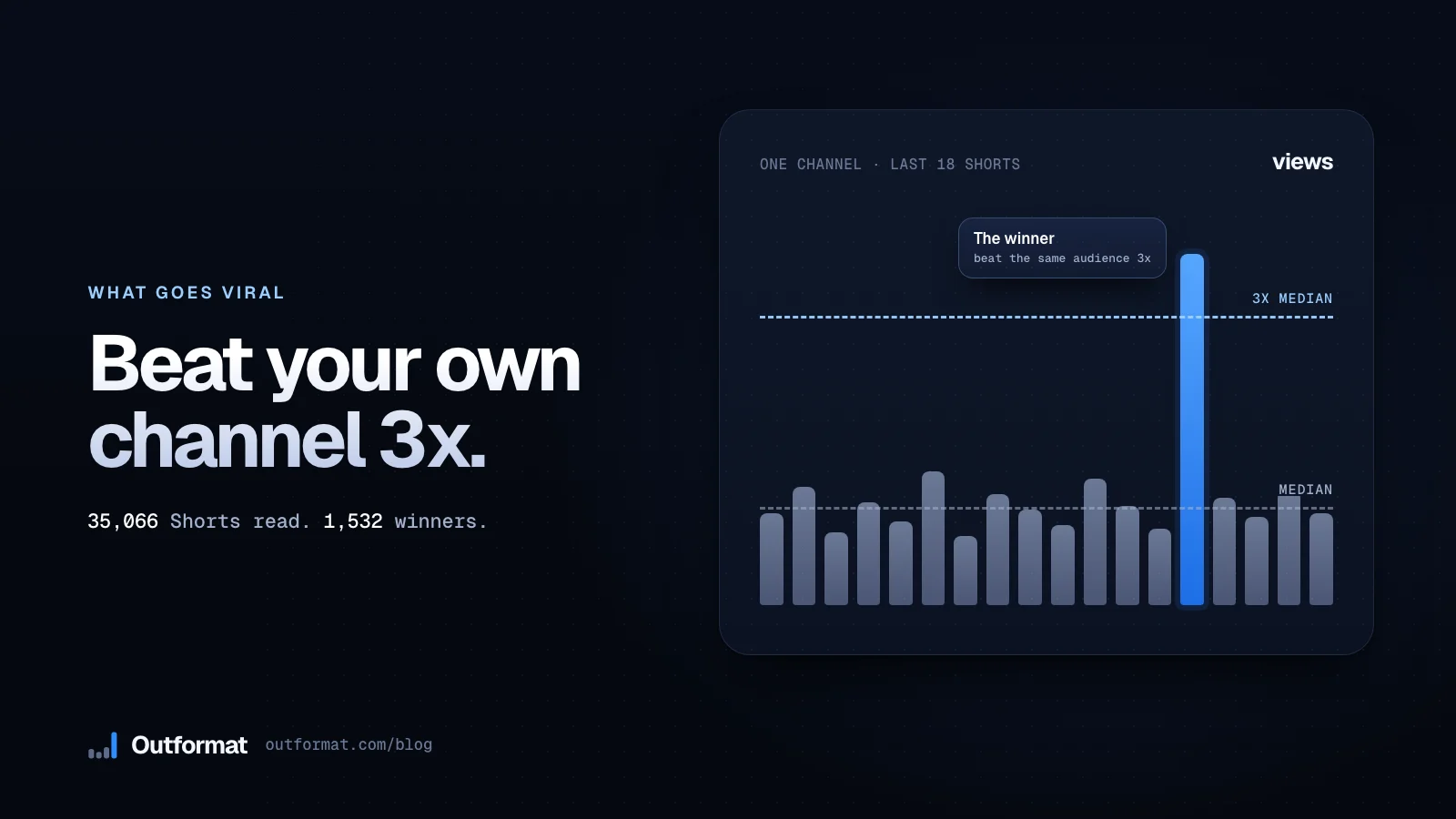
- Find formats that beat their own channel. A Short that tops its channel's median by 3x proves the format, not the creator's audience. Our breakdown of what makes a YouTube Short go viral shows how to spot them.
- Post on a fixed rhythm. The 2027 activity rule rewards 5 Shorts every 90 days at minimum. Aim far above it: the view bar needs volume.
- Make every Short original. Film your own footage or build it from your own photos. Reposts and unedited clips earn nothing.
- Watch engaged views weekly. Divide your last 90 days of engaged views by 90 and compare with 111,112, the daily pace the threshold needs.
- Keep captions out of the buttons. Check every frame in the free Shorts safe zone checker so the like and comment column never hides your text.
If you run a local business, run the ad math before you chase the pool. In YouTube's own example, 1 million engaged views pay $405. One new client from a Short can pay you more than that. Our 12 YouTube Shorts ideas for small businesses start from that goal: Shorts that bring customers through the door, with ad revenue as a bonus.
Find formats that already win in your niche
The fastest path to steady views is a format that already beat its own channel in your niche. Paste your website on the Outformat home page: Outformat reads the Shorts in your niche, keeps the formats that beat their own channel 3x and more, and shows you the real Shorts behind each one. Pick one format this week, post it five times, and compare its engaged views with your channel's median. To build those Shorts from photos without filming, read how to make YouTube Shorts for your business.
Questions
How much does YouTube pay for 1 million Shorts views?
YouTube publishes no fixed rate. In its own hypothetical example, 1 million engaged views in one country earn $405. Your real number depends on that month's ad revenue in each country, everyone's engaged views and music use across all Shorts.
How many views do you need to monetize YouTube Shorts?
Today you join YPP with 1,000 subscribers and 10 million qualified Shorts views in 90 days. From February 1, 2027, new channels need 20 million, and every channel needs to hold 10 million in the last 90 days to earn from the Creator Pool each month.
What percentage of Shorts revenue do creators get?
You keep 45% of the revenue YouTube allocates to you from the Creator Pool, whether or not you use music.
Does using music lower my Shorts earnings?
It does not lower your share. YouTube allocates 100% of your engaged views to you either way. Music use across all Shorts shrinks the pool itself, because part of the revenue pays for music licensing.
Can you make money from Shorts before you join the ads tier?
Yes, through fan funding and Shopping. With 500 subscribers, 3 public uploads in 90 days and 3 million qualified Shorts views in 90 days, you can apply for memberships, Super Thanks and Shopping features where they are available.
Sources
- YouTube Help. YouTube Partner Program overview and eligibility, checked November 2, 2026
- YouTube Help. Updates to the YouTube Partner Program, February 2027
- YouTube Help. Overview of the expanded YouTube Partner Program
- YouTube Help. Shorts revenue sharing and monetization policies
- YouTube Help. Get started creating YouTube Shorts, changes to Shorts views
- YouTube Help. Three-minute Shorts and copyright claims
- YouTube Help. Revenue per mille (RPM)
You might also ask
How much does YouTube pay for 1 million Shorts views?
YouTube publishes no fixed rate. In its own hypothetical example, 1 million engaged views in one country earn the creator $405. Your amount depends on that month's ad revenue in each country, everyone's engaged views and music use across all Shorts.
How many views do you need to monetize YouTube Shorts?
Today you join the YouTube Partner Program with 1,000 subscribers and 10 million qualified Shorts views in the last 90 days. From February 1, 2027, new channels need 20 million, and every channel needs 10 million qualified Shorts views in the last 90 days to earn from the Creator Pool each month.
What percentage of Shorts revenue do creators get?
45% of the revenue allocated to you from the Creator Pool. YouTube says that share stays the same whether or not you use music.
Does using music lower my Shorts earnings?
Not your share of the pool. YouTube allocates 100% of your engaged views to you either way. Music use across all Shorts shrinks the total pool, because part of that revenue covers music licensing.
Do all Shorts views count for monetization?
No. YouTube pays on eligible engaged views. It excludes non-original Shorts like unedited clips or reuploads, artificial views from bots, views that break the advertiser-friendly guidelines, and blocked Shorts.
Outformat
See what goes viral in your niche.
Paste your website or your Google Maps link. You see the real Shorts winning in your niche, then we make your own videos from those formats.
Read next
how-to guides
Learn how long a YouTube Short should be for your business
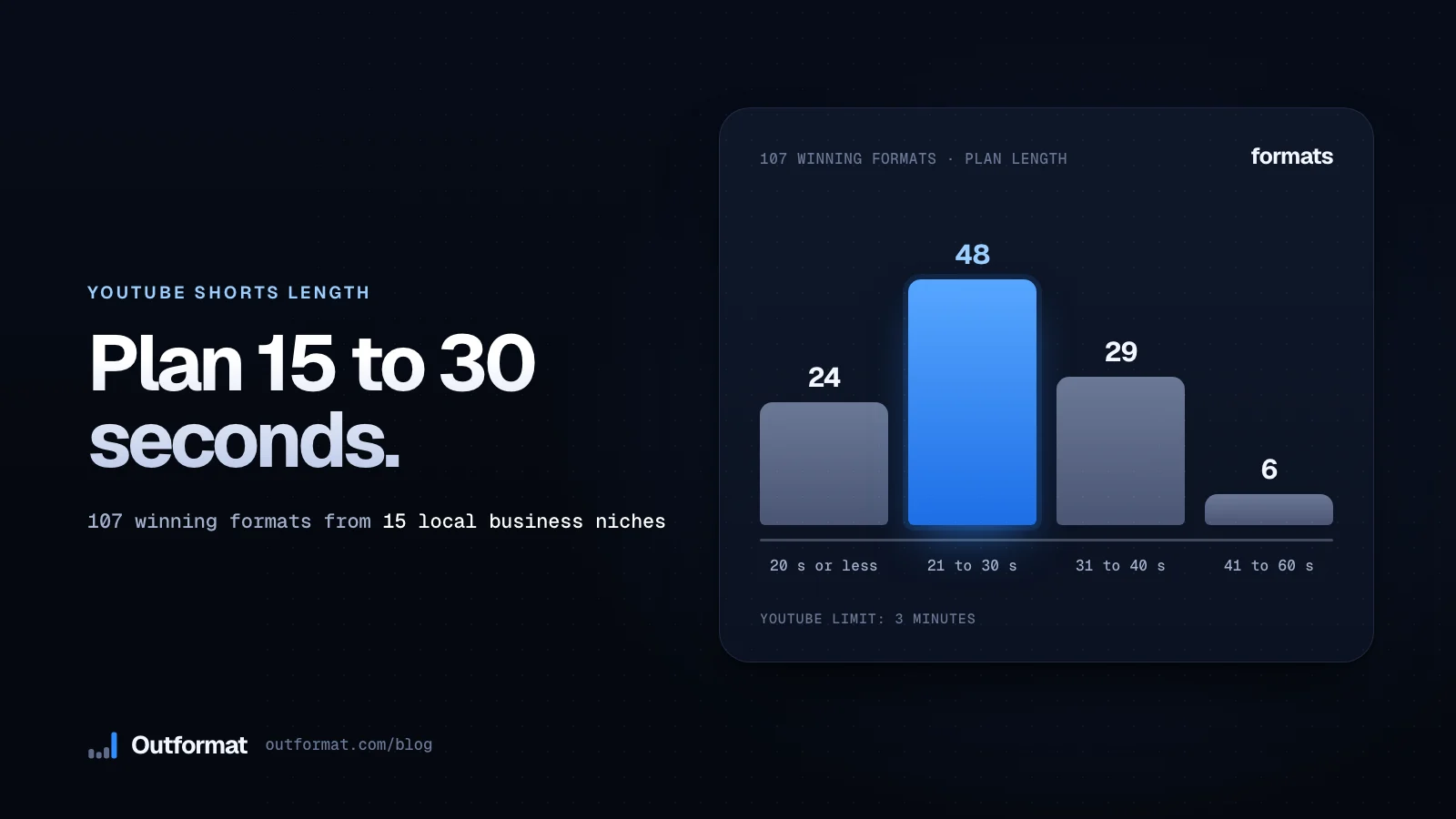
YouTube lets you post Shorts up to 3 minutes. See the lengths 107 winning local business formats use, then plan a 15, 30 or 60 second Short.
how-to guides
Make YouTube Shorts for your business without filming yourself
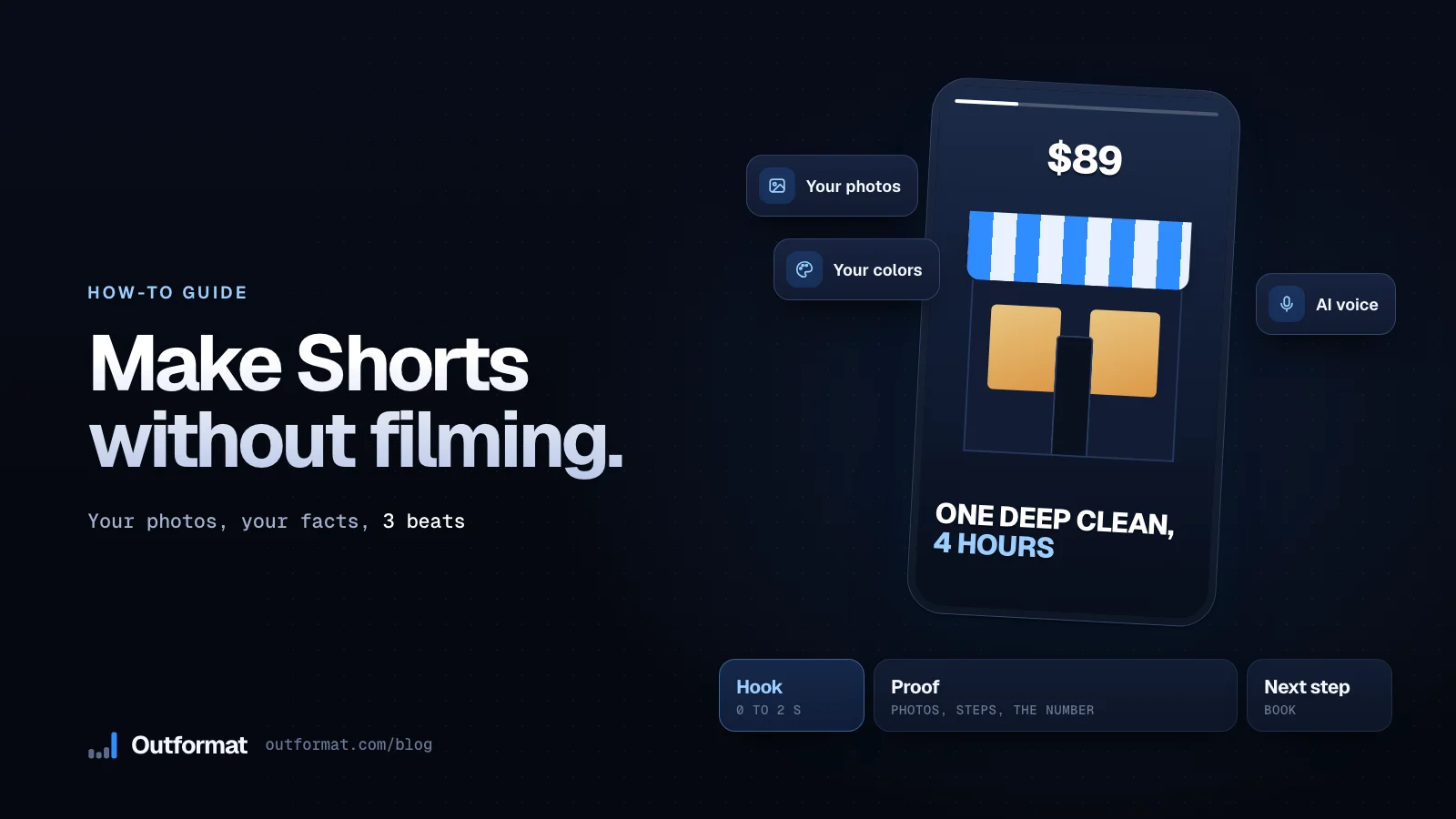
Make Shorts for your business from your photos, your facts and a format that already wins. Follow 7 steps, from the format to the vertical export, with no camera work.
video marketing
Learn what makes a YouTube Short go viral from 35,066 local business Shorts
We read 35,066 Shorts from 15 local business niches and kept the 1,532 that beat their own channel 3x. See the habits they share and test your own Shorts the same way.